Reverse osmosis (RO) is the most thorough water filtration you can fit in a UK home — it’s the only common household method independently certified to reduce TDS, PFAS, lead and a long list of contaminants down to a fraction of their incoming levels. This guide ranks the RO systems we’d actually recommend for UK kitchens, with real £ pricing and an honest take on who each one suits.
Our top reverse osmosis picks
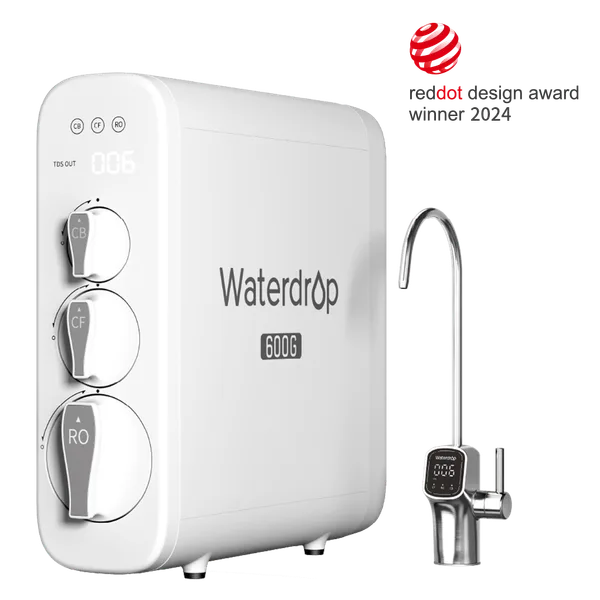
Waterdrop G3P600
Triple NSF-certified (42, 58 & 372), tankless, and slim enough for most UK cabinets. The best balance of price, certification and fit — our default RO pick.
Read our Waterdrop G3P600 review →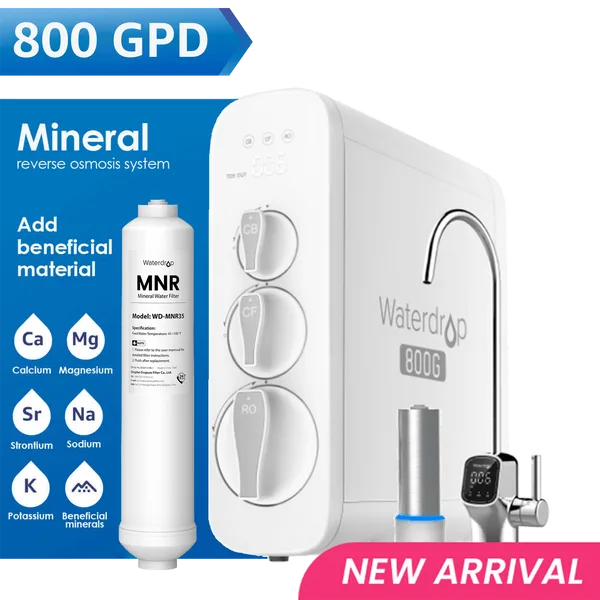
Waterdrop G3P800 (X8)
800 GPD and a class-leading 3:1 pure-to-drain ratio. The upgrade pick for large households or metered supplies where efficiency matters.
Read our Waterdrop G3P800 (X8) review →How the systems compare
| G3P600 | G3P800 (X8) | |
|---|---|---|
| UK price | £399.99 | £599 |
| Flow rate | 600 GPD | 800 GPD |
| Efficiency (pure:drain) | 2:1 | 3:1 |
| Filtration | 8-stage | 9-stage |
| NSF certifications | 42, 58, 372 | 58, 372 |
| Annual filter cost | ~£148 | ~£150 |
| Best for | Most UK homes | High-demand households |
What reverse osmosis removes
RO forces water through a semi-permeable membrane that blocks the vast majority of dissolved contaminants. For UK households the most relevant are:
- PFAS — “forever chemicals” increasingly detected in UK supplies; RO is one of the few proven home methods to reduce them
- Lead & heavy metals — important in older housing with legacy lead pipework
- TDS / dissolved minerals — the source of limescale and “hard” taste
- Chlorine & by-products — taste and odour
- Nitrates and more — depending on the specific membrane
Look for NSF/ANSI 58 certification specifically — it’s the standard that verifies dissolved-solids reduction, and the systems above carry it.
Reverse osmosis in UK hard water
UK supplies are often far harder than the US averages most RO reviews assume. In London and the South East, hardness regularly exceeds 250–300 mg/L. That has two practical consequences:
- Pre-filters work harder and tend to need changing toward the shorter end of their stated life.
- Efficiency matters more — a system that wastes less water (the G3P800’s 3:1 vs the G3P600’s 2:1) saves more on a metered supply in a hard-water home.
Neither is a dealbreaker; both are simply realities to budget for. The payoff UK owners consistently report is the end of kettle limescale and scum on hot drinks.
Do you need a remineraliser?
RO removes beneficial minerals along with the bad. Some UK buyers add a remineralisation stage for taste and to avoid very “flat” water. It’s optional — most owners are happy without — but worth knowing the option exists if you find pure RO water tastes too soft.
Installation & running costs
Every system here is an under-sink unit that connects to the cold feed and drains into existing waste. Two UK realities to plan for:
- Power: these tankless systems need a 13A socket under the sink — the most common UK install surprise.
- Space: UK cabinets are often shallow; measure before buying.
Running costs land around £148–£150/year in filters for both Waterdrop models — cheaper than bottled water within months.
The verdict
For most UK homes, the Waterdrop G3P600 is the best reverse osmosis system to buy: it’s the most certified, fits the most kitchens, and is keenly priced on offer. Choose the G3P800 only if your household genuinely needs the extra flow or you want the better efficiency on a metered supply. We’ll be adding AquaTru, Frizzlife and Osmio systems to this comparison as we complete their reviews.